
Goethe e a retidão
Data do post: 22 de fevereiro de 2010
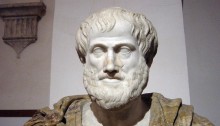
Goethe conhecia muito bem a natureza humana. Difícil dizer se foi o gênio — esse “quase mito” tipicamente romântico-germânico — ou o contato com os homens eminentes do passado e do presente que lhe trouxeram esse conhecimento.
O fato é que os dois versos a seguir estão entre os mais densos, os mais ricos em sentido da sua obra:
Ein guter Mensch, in seinem dunklen Drange,
Ist sich des rechten Weges wohl bewußt (Faust I, 328-329).
“Um bom homem, por obscura que seja sua luta / Está ciente de que há apenas um caminho correto” (trad. livre).
Com isso Goethe revelava duas coisas: que o homem tem a sua liberdade limitada pelas circunstâncias e pela sua consciência (um duplo ‘obstáculo’, interior e exterior, mas sempre redutível à realidade); e que mesmo assim está dotado da prudência — ao menos sob a forma do dever — para decidir corretamente, mesmo que erre por algum motivo alheio ao seu controle.
Aí a tragédia e a esperança que rondam o coração do homem. Não à toa a sua obra da juventude, o “Werther”, traga já nas suas primeiras linhas a pergunta/afirmação: Bester Freund, was ist das Herz des Menschen!, que é o coração humano!
Comentários (2)
A fonte da tirania
Data do post: 1 de fevereiro de 2010
Anthony Daniels (também conhecido como Theodore Dalrymple) fala o- que-todos-sabem-sobre-Ayn-Rand-mas-tinham-medo-de-pensar:
Rand’s virtues were as follows: she was highly intelligent; she was brave and uncompromising in defense of her ideas; she had a kind of iron integrity; and, though a fierce defender of capitalism, she was by no means avid for money herself. The propagation of truth as she saw it was far more important to her than her own material ease. Her vices, of course, were the mirror-image of her virtues, but, in my opinion, the mirror was a magnifying one. Her intelligence was narrow rather than broad. Though in theory a defender of freedom of thought and action, she was dogmatic, inflexible, and intolerant, not only in opinion but in behavior, and it led her to personal cruelty. In the name of her ideas, she was prepared to be deeply unpleasant. She hardened her ideas into ideology. Her integrity led to a lack of self-criticism; she frequently wrote twenty thou- sand words where one would do.
Rand believed all people to be possessed of equal rights, but she found relations of equality with others insupportable. Though she could be charming, it was not something she could keep up for long. She was deeply ungrateful to those who had helped her and many of her friendships ended in acrimony. Her biographer tells us that she sometimes told jokes, but, in the absence of any supportive evidence, I treat reports of her sense of humor much as I treat reports of sightings of the Loch Ness monster: apocryphal at best.
A passionate hater of religion, Rand founded a cult around her own person, complete with rituals of excommunication; a passionate believer in rationality and logic, she was incapable of seeing the contradictions in her own work. She was a rationalist who was not entirely rational; she could not distinguish between rationalism and rationality. Of narrow aesthetic sympathies, she laid down the law in matters of artistic judgment like a panjandrum; a believer in honesty, she was adept at self-deception and special pleading.
Comentários (1)
Ralph McInerny (1929-2010)
Data do post: 30 de janeiro de 2010
Perdemos no dia 29 um dos grandes tomistas contemporâneos, Ralph McInerny. Eu o conhecia por seu extenso trabalho de comentário e exposição de Tomás de Aquino; não sabia que ele era também um bem-sucedido autor de ficção. Vai fazer falta ao cenário intelectual, mas é uma boa adição ao rol das almas bem-aventuradas.
Comentários (2)
Let’s go geek
Data do post: 23 de novembro de 2009
Comentários (1)
Girlfriend in a coma
Aurora (Sunrise, 1927), de F. M. Murnau, é um dos filmes que mais me maravilharam. Assisti há muito tempo com uma pessoa que tem um talento especial para ver um filme e ficamos ambos hipnotizados. Isso não é comum, mas acontece: você se lembrar não só do filme, mas do contexto em que o assistiu. (Uma nota: muitas vezes ajuda a entender o cinema, e qualquer obra de arte, o colocar-se no lugar de observadores inteligentes – “o que fulano perceberia ao ver esse filme?” Foi assim que aprendi, dentro das minhas limitações, a apreciar o cinema: pensando em qual seria a opinião do meu avô, o maior cinéfilo que conheci em erudição e sensibilidade).
Leia o resto do post sobre Murnau e o amor platônico no blog Feliz Nova Dieta.
Comentários (1)
A agressividade vai ao cinema
Quem não se diverte com o banho de sangue do Kill Bill, ou com o Clint Eastwood metendo bala na cara de bandidos? Isso sem falar nas pancadarias e tiroteios de James Bond, Jason Bourne e Jack Bauer.
Acredito que nosso gosto pela violência na tela tenha a ver com o lado destrutivo da natureza humana. Seria a “pulsão de morte” freudiana? Não sei; prefiro o nome clássico, “apetite irascível”: nossa capacidade de sentir raiva e buscar a superação de algum obstáculo.
Continue a leitura no Terra à Vista.
Nenhum comentário ainda. Seja o primeiro a comentar!
Fundamental truth
Data do post: 15 de novembro de 2009
Um tom que me agrada num discurso e numa ação é aquele tom ‘burguês’, no bom sentido (de burgo, cidade), que se dirige aos círculos menores e ativos; o círculo dos deveres concretos de uns para com os outros numa esfera determinada (e sempre aberta a novos sujeitos e a novas obrigações). Os deveres que tenho para com as pessoas de carne e osso que encontro na rua; na Universidade; na minha casa; nos hospitais; e por aí vai. Esses são nossos deveres para com o próximo. Posso até dizer que qualquer vocação profissional tem de ser, com todas as letras, uma vocação (Beruf, Berufung) de serviço à sociedade – essa afirmação é absolutamente correta, e sem essa finalidade não passo de um parasita. Mas se esse serviço à sociedade não for concreto, não serve para nada – é um discurso demagógico, mesmo que não seja político em sentido estrito.
Continue lendo o post publicado no blog Feliz Nova Dieta.
Comentários (2)
Keats and Yeats are on your side
Data do post:
O conhecimento próprio é um imenso poder; com ele a pessoa pode tanto demolir a si mesma como começar, finalmente, a dar passos práticos na direção certa. Muitos ficarão a vida toda no cinismo teórico, celebrando-o qual escravos do seu próprio orgulho. Outros cessarão a destruição e, finalmente, olharão para si mesmos, abandonando sua autopiedade com realismo: isso eu posso fazer, e é necessário começar imediatamente. E virão as medidas práticas, palpáveis, reais, ditadas pela prudência. E então a criança pára de chorar e de jogar a toalha. E limpa as lágrimas, em sinal de vitória – o círculo vicioso foi quebrado.
Continue a ler o post publicado no blog Feliz Nova Dieta.
Comentários (1)
Tyranny set in stone
by Roger Kimball
It is in the moment of defeat that the inherent weakness of totalitarian propaganda becomes visible. Without the force of the movement, its members cease at once to believe in the dogma for which yesterday they still were ready to sacrifice their lives.
—Hannah Arendt
The inevitable never happens. It is the unexpected always.
—John Maynard Keynes
Was there ever a more fitting monument to tyranny than the Berlin Wall? Conceived in desperation, this brutal barrier was erected in 1961 by the state not for the protection but for the incarceration of its citizens. Hold fast to that thought. The Berlin Wall was the stuff of gritty spy novels, the literal instantiation of Winston Churchill’s “iron curtain,” which in 1946, with characteristic prescience, he saw descending across Central and Eastern Europe. The Berlin Wall was also an inescapable indictment, not just of a particular society but of an entire world view, the world view of Soviet Communism with its rhetoric of justice and class struggle in one hand and its reality of the Gulag and the systematic obliteration of human freedom in the other.
Do we remember that? The passage of time tends to soften outlines, confuse oppositions, and swallow fundamental distinctions in a patois of complication. It is a process that promises greater understanding, or at least greater sophistication. Often, however, its chief fruit is an enervating, ultimately an endarkening, relativism. Although fragments of the Berlin Wall are distributed like talismans of freedom across the globe—fittingly, a large sliver stands outside the Reagan Library in California —its awful significance seems muted, even lost in the cacophony of historical second-guessing, the distorting glaze of nostalgia.
The story of the Berlin Wall is inseparable from the story of the peculiar disposition of Berlin following World War II. Thrust some 100 kilometers into the decidedly non-democratic German Democratic Republic, Berlin was nominally under the control of the four victorious allies, with France, Great Britain, the United States, and the Soviet Union each presiding over a separate quadrant. In reality, the city, like Germany itself, was split between democracy in the West and Communist tyranny in the East. It was a situation that guaranteed the city would become a theater in which the democratic West would be in daily public contest with Soviet Communism. Leia mais…
Comentários (1)
The costs of abstraction
by Anthony Daniels
One of the most extraordinary episodes in the intellectual history of the twentieth century—if, indeed, something that lasted half a century or more can properly be called an episode—is the moral and sometimes material support given by much of the western intelligentsia to the Soviet tyranny, a tyranny that made all previous tyrannies seem relaxed, liberal, and almost amateurish by comparison. Men who found the slightest circumscription of their own freedom intolerable raised hosannas to the most systematic and concerted abrogation of personal liberty yet attempted; many were those who strained at gnats to swallow a camel.
No doubt the explanation for this phenomenon is psychologically and sociologically complex. A commonly cited factor that supposedly contributed to it was ignorance of the real situation obtaining in the Soviet Union: intellectuals were therefore able to project on to the Soviet Union their utopian fantasies unconstrained by any appreciation of the sordid realities. This explanation, however, is entirely false.
I mean no disrespect to the brave and colossal labors of figures such as Alexander Solzhenitsyn and Robert Conquest, nor do I deny the scope of their actual historical effect upon the opinions of the Western intelligentsia, when I say that they added nothing whatever of deep moral significance to the material that was readily available in the west in the 1920s and 1930s, and that could and should have enabled people to form a proper moral judgment about the Soviet Union and its “experiment,” and this at the very time when it was doing its worst. Everything about the Soviet Union was known at the time; the problem was that nothing was believed. Leia mais…
Nenhum comentário ainda. Seja o primeiro a comentar!
Posts Antigos »